


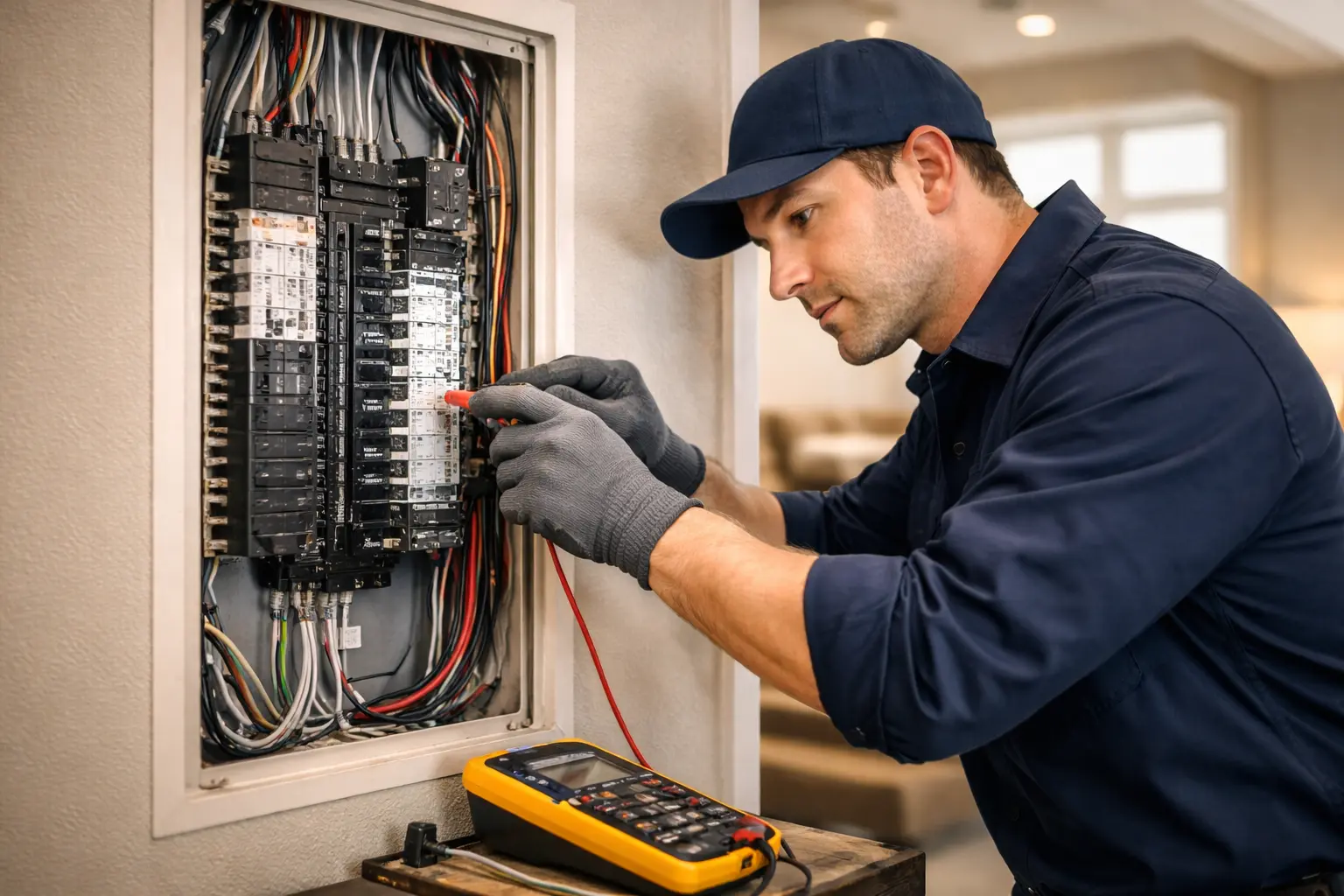
As an expat, the best time to think about a home’s electrical system is before you commit to the address. Houston housing stock runs the gamut, from 1920s bungalows in The Heights to new builds in Katy, and the difference matters. Older homes may still carry aluminum wiring, undersized panels, or two-prong outlets that were fine decades ago and are not fine now.
A few things worth checking during the walkthrough, or asking your inspector to flag:
- Panel capacity. A 100-amp panel can struggle with central AC, an EV charger, and a home office running at once. 200 amps is the modern baseline.
- GFCI and AFCI coverage. Current code, under the 2020 NEC, requires arc-fault protection across most living areas of a dwelling, not only bedrooms.
- Generator readiness. Ask whether the home has a transfer switch or a generator inlet. Retrofitting one later is doable, but it’s cheaper when you know going in.
- Surge protection. A whole-home surge protector at the panel is cheap insurance for the expensive electronics you shipped in from overseas.
Settling In and Getting the Baseline Right
Once you have the keys, the first 60 days are your window to fix anything that shouldn’t wait. Expats often arrive with 220V appliances from Europe or Asia and try to run them through cheap step-down converters. That’s a fire risk, not a workaround. Either sell the appliance before you fly or plan a dedicated circuit for it.
This is also the moment to walk the house at night and notice what flickers, what buzzes, and which outlets feel warm. Small signs matter. A licensed electrician can sort out what’s cosmetic and what isn’t in a single visit.
Preparing the House Before Storm Season
By April, Houston homeowners who’ve been through a season start booking work. You should too. Hurricane Beryl in July 2024 left a wide swath of southeast Texas without power for days, and demand for electricians, generator installers, and permit inspectors goes vertical the moment a storm has a name.
Preparation at this stage is less about heroics and more about building slack into the system. Trim tree limbs away from the service drop. Photograph the panel and label every breaker. Test the generator under load, not just on idle.
If you don’t have a generator, decide now whether you want a portable unit with an inlet or a permanent standby, because installation timelines run weeks, not days. Firms like Electrical Works of Houston handle panel upgrades and generator work across neighborhoods like River Oaks, Memorial, and the Heights, and April bookings look very different from July ones.
During the Outage Itself
When the lights go out, someone new to the city tends to wait it out for a few hours. That instinct is often wrong. Restoration can stretch for days after a major storm, and the first hour is when your decisions matter most.
- Kill the main breaker if flooding is a possibility, or if you plan to run a portable generator, to protect line workers and your own equipment.
- Unplug sensitive electronics. Surges when power returns cause as much damage as the outage itself.
- Never run a generator indoors or in an attached garage. Carbon monoxide kills fast and without warning.
- Keep the fridge closed. A full freezer holds for about 48 hours if you don’t open the door.
After the Storm, Reset the System
When power comes back, restart the house slowly. Bring HVAC, well pumps, and large appliances online one at a time to avoid tripping breakers or damaging motors. Look for scorch marks around outlets, breakers that won’t reset, or a burning smell near the panel. Any of those means calling an electrician before you keep using the circuit.
Longer term, treat each storm as feedback. If half the house went dark before the generator caught up, the transfer switch may need reconfiguring. If a surge fried the router, the whole-home protector is either missing or spent.
Houston’s grid is what it is, and the average customer here already sees hundreds of minutes of interruption in a normal year. Building a home that shrugs those off is the closest thing to peace of mind an expat gets on the Gulf Coast.